<?xml version="1.0" encoding="utf-8"?><feed xmlns="http://www.w3.org/2005/Atom" ><generator uri="https://jekyllrb.com/" version="3.10.0">Jekyll</generator><link href="https://avnewman.github.io/feed.xml" rel="self" type="application/atom+xml" /><link href="https://avnewman.github.io/" rel="alternate" type="text/html" /><updated>2026-03-01T18:38:41+00:00</updated><id>https://avnewman.github.io/feed.xml</id><title type="html">Andrew Newman’s Professional Pages</title><subtitle>Professional website for research, education, and community activities related to Andrew Newman&apos;s research group&apos;s efforts towards understanding Earth processes associated with geologic hazards.</subtitle><author><name>Andrew Newman</name><email>anewman_at_gatech_dot_edu</email></author><entry><title type="html">Dr. Murekezi!!!</title><link href="https://avnewman.github.io/gradstudents/Introducing-Dr-Murekezi/" rel="alternate" type="text/html" title="Dr. Murekezi!!!" /><published>2025-11-20T20:59:22+00:00</published><updated>2025-11-20T20:59:22+00:00</updated><id>https://avnewman.github.io/gradstudents/Introducing-Dr-Murekezi</id><content type="html" xml:base="https://avnewman.github.io/gradstudents/Introducing-Dr-Murekezi/"><![CDATA[<p>Way to go Dr. <a href="https://www.linkedin.com/in/derrickmurekezi/">Derrick Murekezi</a> for all your hard work and 
successfully defending your PhD thesis today on “Magma-Assisted Extension and Crustal Deformation in the Kivu Rift: Geodetic Constraints on the 2021 Nyiragongo Dike Intrusion”.</p>

<p>I wish you well as you start your work in the private sector.</p>

<p><img src="/assets/images/student/Derrick_Defense1_20251120_2056.jpg" alt="Defending" /></p>]]></content><author><name>Andrew Newman</name><email>anewman_at_gatech_dot_edu</email></author><category term="GradStudents" /><summary type="html"><![CDATA[Way to go Dr. Derrick Murekezi for all your hard work and successfully defending your PhD thesis today on “Magma-Assisted Extension and Crustal Deformation in the Kivu Rift: Geodetic Constraints on the 2021 Nyiragongo Dike Intrusion”.]]></summary></entry><entry><title type="html">Seafloor Geodesy in Alaska</title><link href="https://avnewman.github.io/field/GNSSAinAlaska/" rel="alternate" type="text/html" title="Seafloor Geodesy in Alaska" /><published>2024-06-26T19:37:03+00:00</published><updated>2024-06-26T19:37:03+00:00</updated><id>https://avnewman.github.io/field/GNSSAinAlaska</id><content type="html" xml:base="https://avnewman.github.io/field/GNSSAinAlaska/"><![CDATA[<p>My grad student, Nathalie Chavarría, and I are on-board the RV Sikuliaq at the moment deploying a bunch of transponders and a couple of autonomous surface vehicles to observe offshore fault behavior and improve on our methodologies.</p>

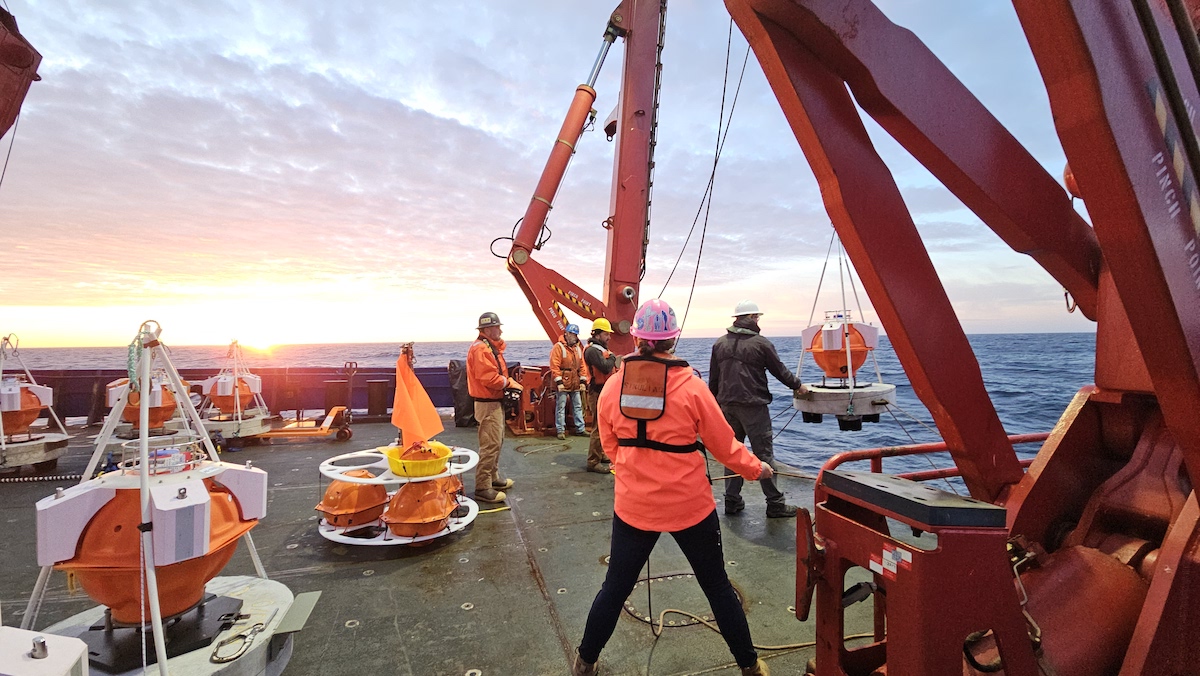
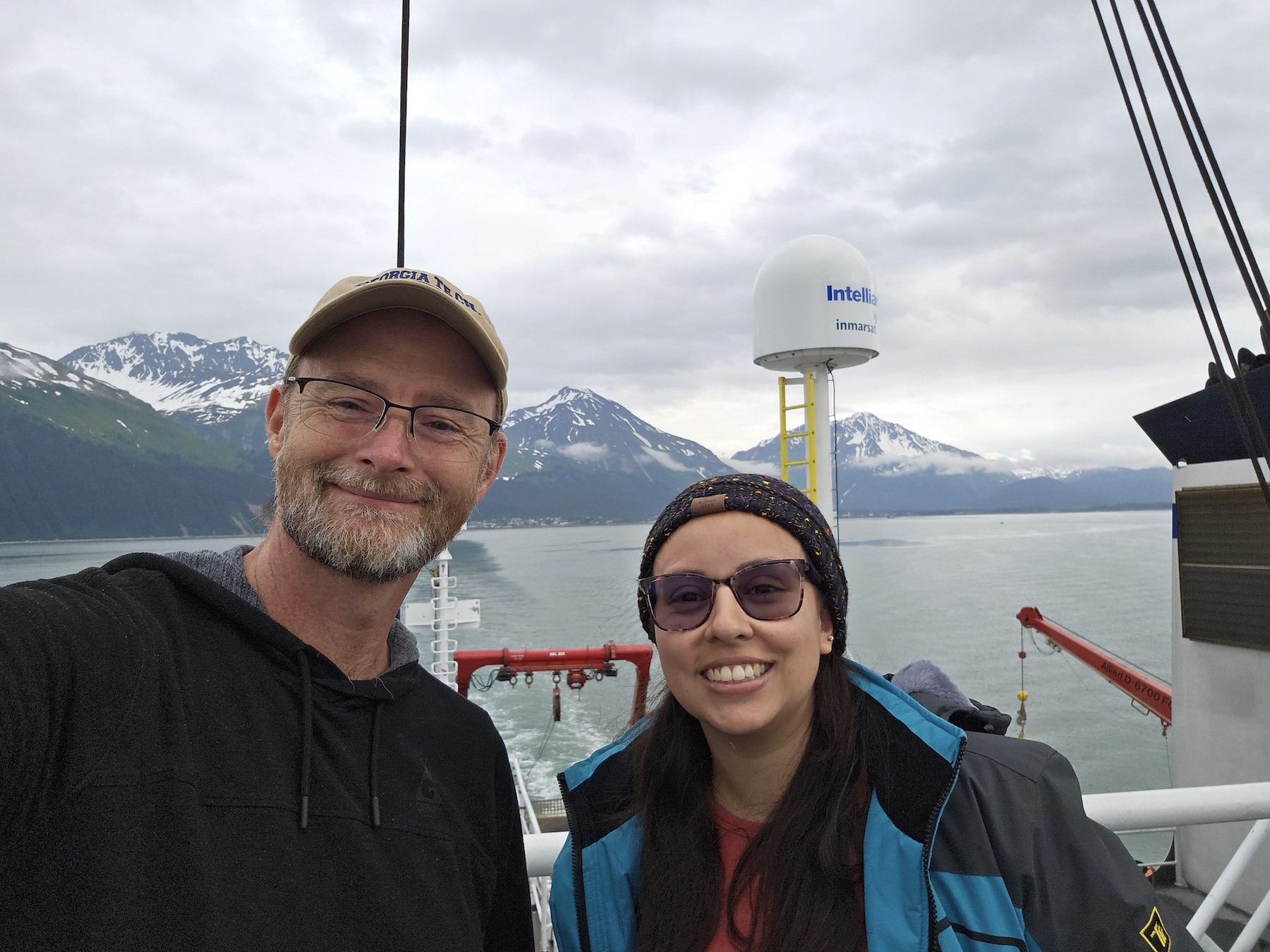
<p><img src="/assets/images/field/Alaska/20240620_090726.jpg" alt="Heading out to sea" />
Nathalie and I as we are heading out from Seward to start our deployment.</p>

<p>Half of this work is the <a href="https://www.seafloorgeodesy.org/commexp">Community Near-trench Geodetic Experiment</a> that is deploying 18 transponders across a large swath of the Aleutian trench 150° and 165°W.  The instruments make up six geodetic sites that will be measured about once a year over the next four years to capture deformation associated with some of the largest earthquakes ever recorded. Our Apply-2-Sail students are writing a great <a href="https://near-trench.blogspot.com">blog</a> as we progress.</p>

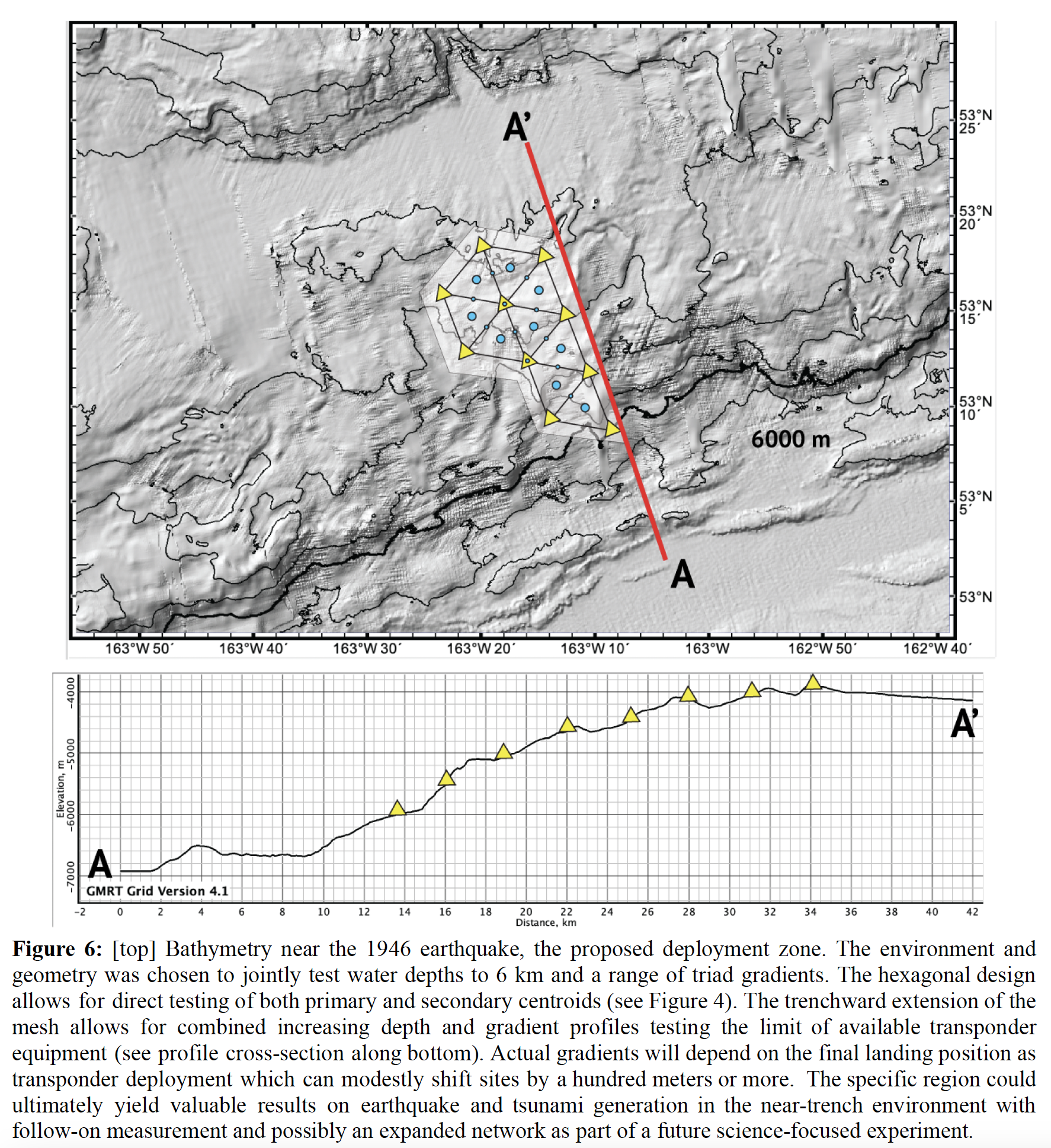
<p>The second half is a methodology experiment trying to push our deformation observations into deeper and steeper terrains.  Here we are deploying a mesh geometry of transponders to test our capabilities to measure in water depths of up to 6000 m using a Wave Glider and lower frequency acoustics than for our other systems in the community sites.   The mesh is also going in very steep seafloor (near the trench) where we will perform initial tests to determine repeatability with such differential water depths (and acoustic wave paths).  Lastly, the <a href="/funding/MeshGNSS">Mesh</a>, allows for lower cost observations in regions where we would like to obtain a dense field of deformation.</p>

<p><img src="/assets/images/field/Alaska/20240622_053426.jpg" alt="Proposed Design" />
Scripps and Columbia crew working with the amazing folks running the Sikuliaq.</p>

<p>Follow more of our <a href="https://seafloorgeodesy.org">Seafloor Geodesy work here</a>.</p>]]></content><author><name>Andrew Newman</name><email>anewman_at_gatech_dot_edu</email></author><category term="Field" /><summary type="html"><![CDATA[My grad student, Nathalie Chavarría, and I are on-board the RV Sikuliaq at the moment deploying a bunch of transponders and a couple of autonomous surface vehicles to observe offshore fault behavior and improve on our methodologies.]]></summary></entry><entry><title type="html">Using CNN for automatic discrimination of Nuclear Blasts and Earthquakes</title><link href="https://avnewman.github.io/paper/SeismicDiscriminant/" rel="alternate" type="text/html" title="Using CNN for automatic discrimination of Nuclear Blasts and Earthquakes" /><published>2023-09-08T05:07:33+00:00</published><updated>2023-09-08T05:07:33+00:00</updated><id>https://avnewman.github.io/paper/SeismicDiscriminant</id><content type="html" xml:base="https://avnewman.github.io/paper/SeismicDiscriminant/"><![CDATA[<p>We just published a <a href="https://doi.org/10.1029/2022GL101528">paper</a>, lead by recent graduate Louisa Barama, on a machine learning method to automatically and rapidly characterize seismic signals by source.  We specifically try to differentiate background noise (what we experience most of the time), natural earthquake waves, and underground nuclear explosions. This study is particularly novel in that it does so with a global dataset including signals both near and far from sources, changing features dramatically along the way. <br />
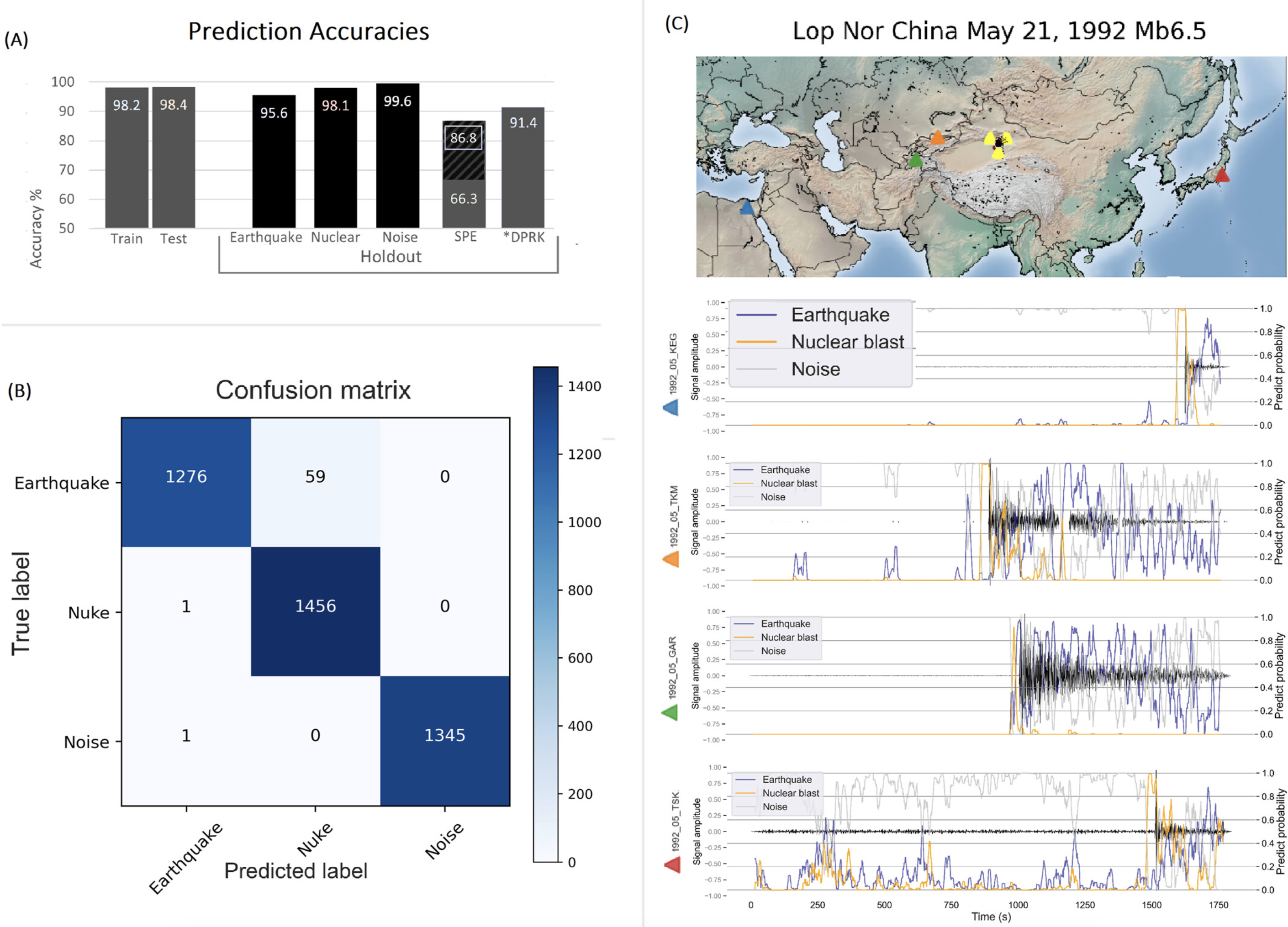
Using data not used in initial training, we found that we could automatically detect and characterize about 96% of earthquake signals and 98% of the nuclear signals from single seismic waves.</p>

<p>While not done here, such methods can be further strengthened by evaluating a suite of stations for the same periods to capture signals possible missed by some stations.  Furthermore, though we classify only two types of impulse functions, the work strongly suggests we can apply such methods elsewhere for other seismic signals, including volcanic activity, landslides, and possibly slow-moving earthquakes.</p>

<p>Very exciting indeed!</p>

<p><img src="/assets/images/figures/NukeDiscrimination_2023_GRL.png" alt="Prediction capabilities" />
Overall prediction accuracies from our generalized global neural network.</p>]]></content><author><name>Andrew Newman</name><email>anewman_at_gatech_dot_edu</email></author><category term="Paper" /><summary type="html"><![CDATA[We just published a paper, lead by recent graduate Louisa Barama, on a machine learning method to automatically and rapidly characterize seismic signals by source. We specifically try to differentiate background noise (what we experience most of the time), natural earthquake waves, and underground nuclear explosions. This study is particularly novel in that it does so with a global dataset including signals both near and far from sources, changing features dramatically along the way. Using data not used in initial training, we found that we could automatically detect and characterize about 96% of earthquake signals and 98% of the nuclear signals from single seismic waves.]]></summary></entry><entry><title type="html">Mesh Network GNSS-Acoustic Experiment in Alaska</title><link href="https://avnewman.github.io/funding/MeshGNSS/" rel="alternate" type="text/html" title="Mesh Network GNSS-Acoustic Experiment in Alaska" /><published>2023-08-31T07:50:01+00:00</published><updated>2023-08-31T07:50:01+00:00</updated><id>https://avnewman.github.io/funding/MeshGNSS</id><content type="html" xml:base="https://avnewman.github.io/funding/MeshGNSS/"><![CDATA[<p>Update: The Postdoc position is now open for applications.
You can <a href="https://careers.hprod.onehcm.usg.edu/psp/careers/CAREERS/HRMS/c/HRS_HRAM_FL.HRS_CG_SEARCH_FL.GBL?Page=HRS_APP_JBPST_FL&amp;Action=U&amp;FOCUS=Applicant&amp;SiteId=3000&amp;JobOpeningId=263629&amp;PostingSeq=1">apply here</a>, and please feel free to contact me  to discuss the position.</p>

<p>I was recently <a href="https://www.nsf.gov/awardsearch/showAward?AWD_ID=2321297">awarded</a> funding for an exciting new technical experiment to push the limits of what we can do with GNSS-Acoustic-based seafloor geodetic observations.  In the experiment, we are buying and deploying a new Wave Glider and 10 new transponders for deployment in the near-trench environment that are expected to be most responsible for large tsunamis.</p>

<p>Over three years we will specifically be testing (1) deep-water measurements using lower frequency transponders than commonly used, (2) observations that include high gradients of change across the seafloor, and (3) the application of a mesh-network design that can dramatically reduce the cost of observations where dense deformation data are helpful.</p>

<p>The deployment will occur in June/July 2024 on the RV Sikuliaq, during the initial deployment of instrumentation in Alaska for the <a href="https://www.seafloorgeodesy.org/commexp">Community Near-trench Geodetic Experiment</a>. We will commence observations then, with a second Wave Glider deployment planned for 2025.</p>

<p>My co-investigators are <a href="https://mzumberge.scrippsprofiles.ucsd.edu/biography/">Mark Zumberge</a> at UCSD-Scripps, and <a href="https://www.cive.uh.edu/faculty/xie-surui">Surui Xie</a> at University of Houston.  We will soon be looking for a postdoc to manage the data processing associated with this experiment.</p>

<p>A little more detail can be gained from the below image I pulled from the proposal.</p>

<p><img src="/assets/images/figures/Proposed_Mesh_geometry_AK2024.png" alt="Proposed Design" />
The proposed experiment design.</p>]]></content><author><name>Andrew Newman</name><email>anewman_at_gatech_dot_edu</email></author><category term="Funding" /><summary type="html"><![CDATA[Update: The Postdoc position is now open for applications. You can apply here, and please feel free to contact me to discuss the position.]]></summary></entry><entry><title type="html">Community GNSS-Acoustics in Cascadia</title><link href="https://avnewman.github.io/field/CascadiaGNSS/" rel="alternate" type="text/html" title="Community GNSS-Acoustics in Cascadia" /><published>2023-07-11T05:52:22+00:00</published><updated>2023-07-11T05:52:22+00:00</updated><id>https://avnewman.github.io/field/CascadiaGNSS</id><content type="html" xml:base="https://avnewman.github.io/field/CascadiaGNSS/"><![CDATA[<p>We are nearing the end of a little boat-based field research to help understand how faults lock-up and generate some of the world’s largest earthquakes and tsunamis. Along with some cool fundamental science, we are also training some early-career scientists on how to perform similar such projects in the future.  Learn more about the <a href="https://www.seafloorgeodesy.org/commexp">Near-Trench Community Experiment</a> and follow-along on the group <a href="https://near-trench.blogspot.com">Blog</a>.  Below, are a few photos I took so far.</p>

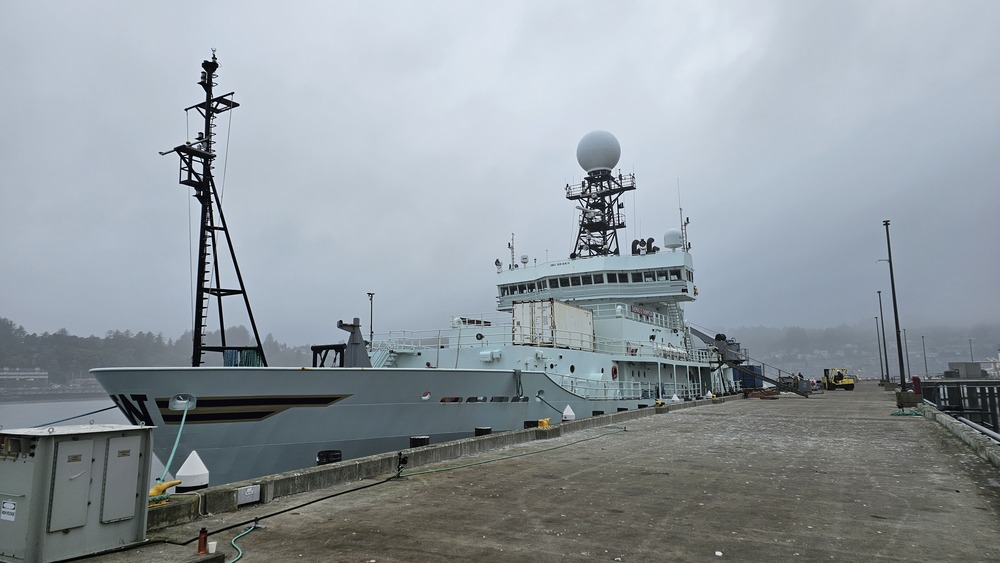
<p><img src="/assets/images/field/Cascadia/sm_20230706_082112.jpg" alt="Thompson Research vessel" />
The <strong>Thomas G. Thompson</strong> Research vessel is owned by the US Navy, managed by the University of Washington for the U.S. National Science Foundation, and docked at the NOAA and Oregon State site in Newport.  <em>Confusing, huh?</em></p>

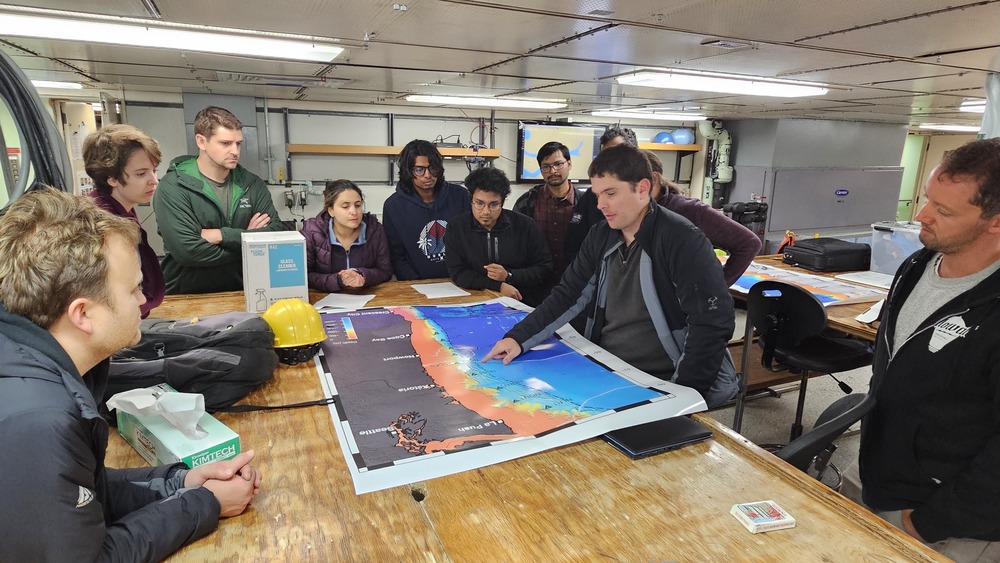
<p><img src="/assets/images/field/Cascadia/sm_20230706_203202.jpg" alt="Plotting the course" />
<strong>Plotting the course:</strong> Washington Scientist, John DeSanto explaining the route plan to the PIs (including me), and a varied group of early-career scientists ready to get their “sea legs”.</p>
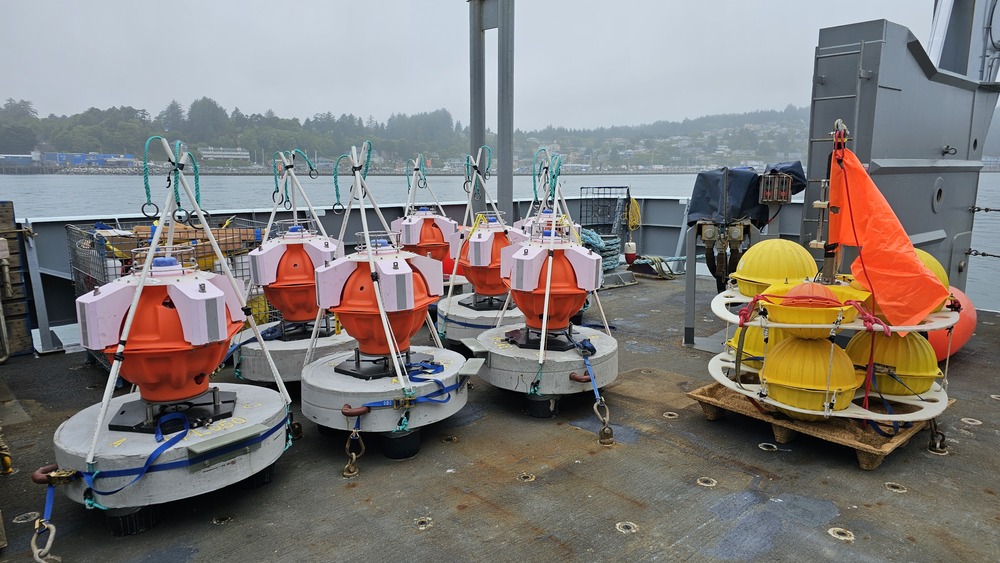
<p><img src="/assets/images/field/Cascadia/sm_20230706_134411.jpg" alt="Seafloor Transponders" />
<strong>Seafloor Transponders:</strong> Well, not yet.  These 7 transponders are going to be deployed offshore Washington and Oregon to complete the network of 6 new GNSS-Acoustic stations making of the Cascadia component of the Near-trench community experiment.</p>
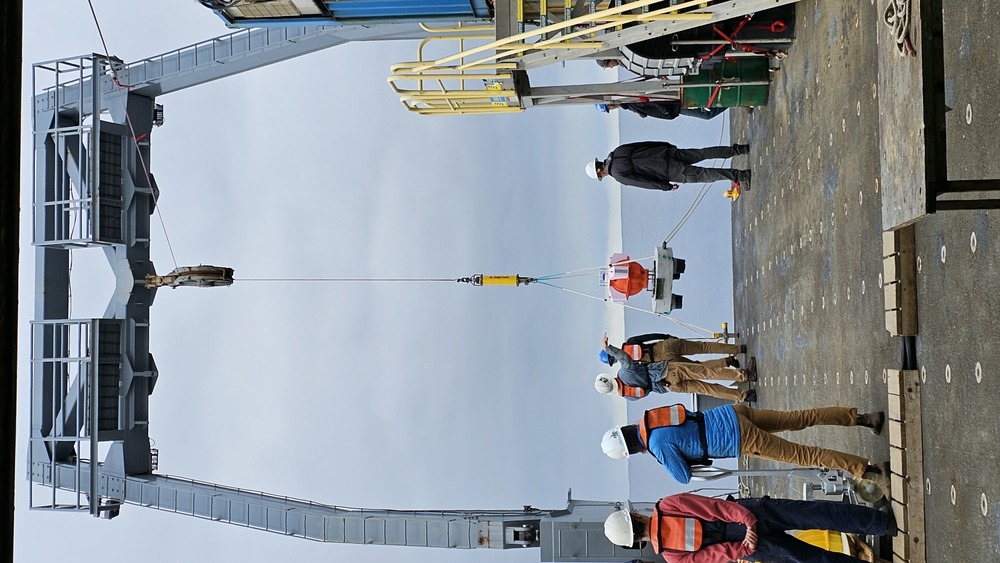
<p><img src="/assets/images/field/Cascadia/sm_20230710_085013.jpg" alt="Pressure Drop" />
<strong>Pressure Drop:</strong> Not quite David Bowie-level, but one in three of each of the transponders being deployed have a pressure gauge within to measure the short-term changes in the height of the seafloor  – possibly associated with very slow earthquakes.</p>
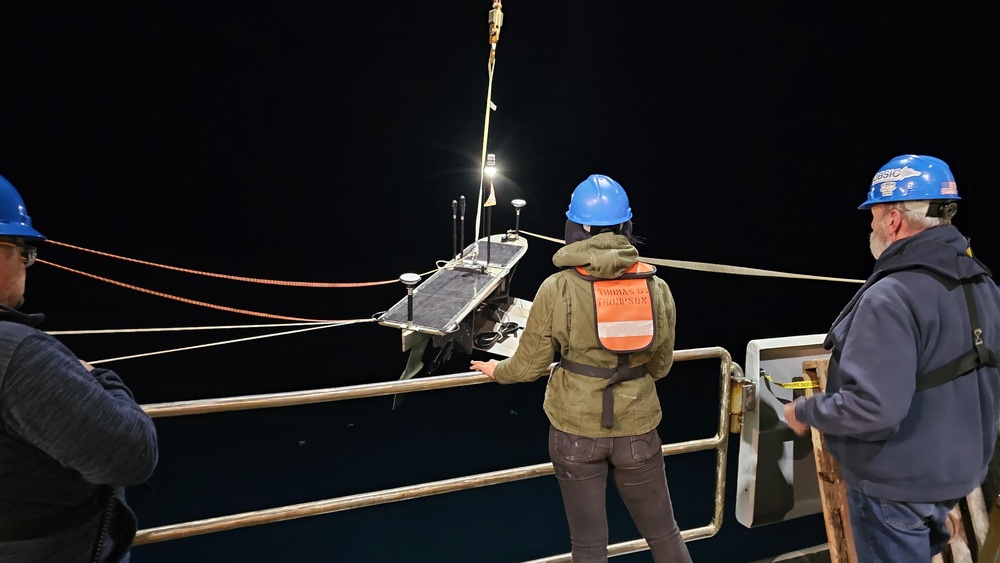
<p><img src="/assets/images/field/Cascadia/sm_20230707_222822.jpg" alt="Wave Glider away!!" /> 
<strong>Glider away!!!</strong> One of two autonomous surface vessels, called Wave Gliders, is over the ship and about to be let loose into the ocean for interrogating the transponders to determine their precise positions.</p>
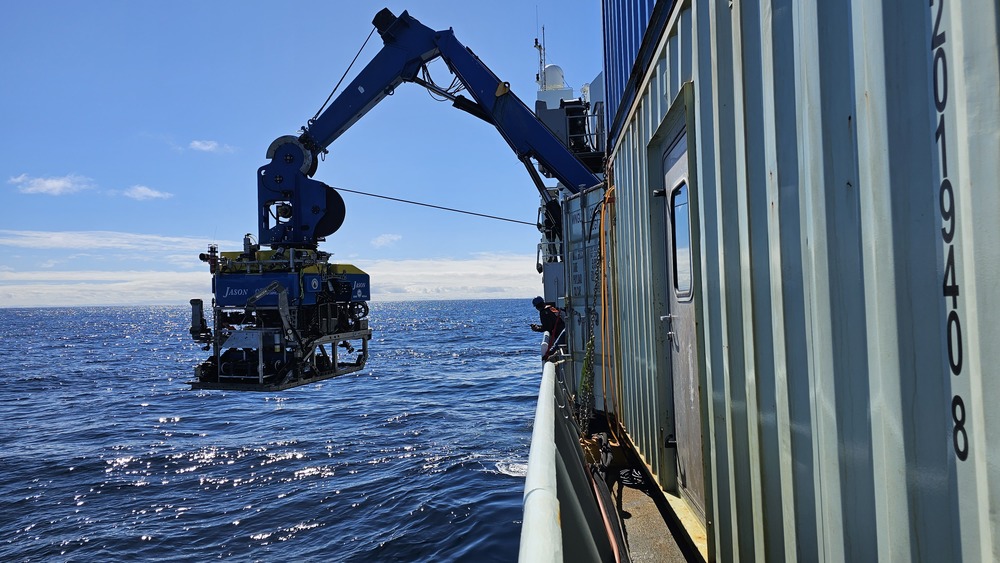
<p><img src="/assets/images/field/Cascadia/sm_20230708_162214.jpg" alt="A little robotic fieldwork" />
<strong>Robots at work:</strong> Wood’s Hole’s JASON Remotely Operated Vehicle (ROV) is going down to the seafloor to collect data from a different type of seafloor deformation sensor as a part of another project.</p>]]></content><author><name>Andrew Newman</name><email>anewman_at_gatech_dot_edu</email></author><category term="Field" /><summary type="html"><![CDATA[We are nearing the end of a little boat-based field research to help understand how faults lock-up and generate some of the world’s largest earthquakes and tsunamis. Along with some cool fundamental science, we are also training some early-career scientists on how to perform similar such projects in the future. Learn more about the Near-Trench Community Experiment and follow-along on the group Blog. Below, are a few photos I took so far.]]></summary></entry><entry><title type="html">Rwandan GNSS (and MT) Field Campaign</title><link href="https://avnewman.github.io/field/RwandaGNSS2023/" rel="alternate" type="text/html" title="Rwandan GNSS (and MT) Field Campaign" /><published>2023-06-02T13:48:25+00:00</published><updated>2023-06-02T13:48:25+00:00</updated><id>https://avnewman.github.io/field/RwandaGNSS2023</id><content type="html" xml:base="https://avnewman.github.io/field/RwandaGNSS2023/"><![CDATA[<p>We are just now wrapping up GPS/GNSS Field work and some training along the Kivu Rift in Rwanda.</p>
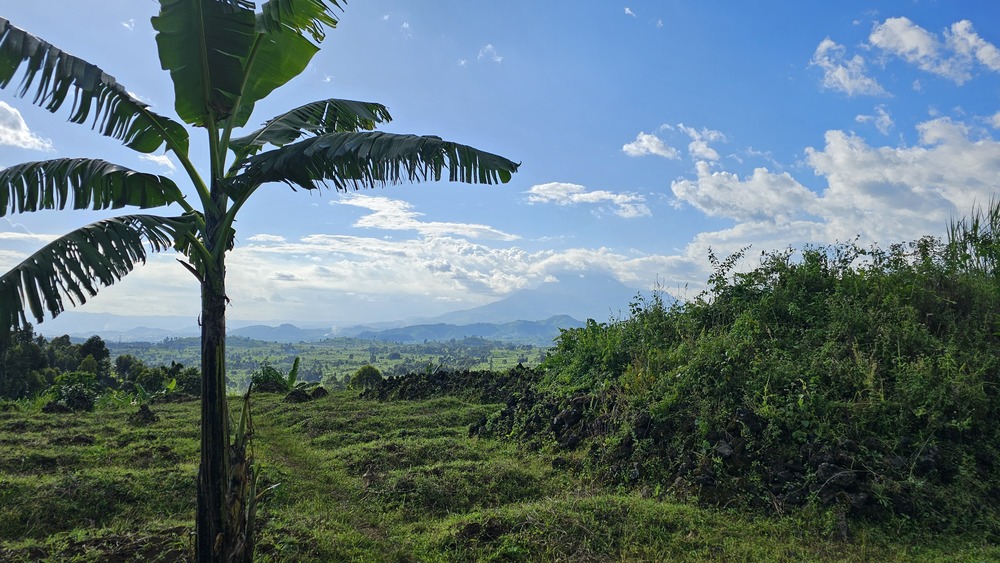
<p>Before heading out to the field, we met individually with personnel from the Rwandan Mining Board (<a href="https://www.rmb.gov.rw/">RMB</a>), the Rwandan Environmental Management Agency (<a href="https://www.rema.gov.rw/">REMA</a>), and the East African Institute for Fundamental Research (<a href="https://eaifr.org/">EAIFR</a>).</p>

<p>We serviced our 7 continuous GNSS station, established one new campaign GNSS station, and performed a Magnetotelluric survey (MT), last part led by colleague Samer Naif.  More of our project can be read <a href="/KIVU">here</a>.</p>

<p><img src="/assets/images/field/Rwanda/20230530_155720_sm.jpg" alt="Nyriagongo Volcano" />
Scouting site for Magnetotelluric measurements along the Rwanda-DRC border looking toward Nyriagongo Volcano.
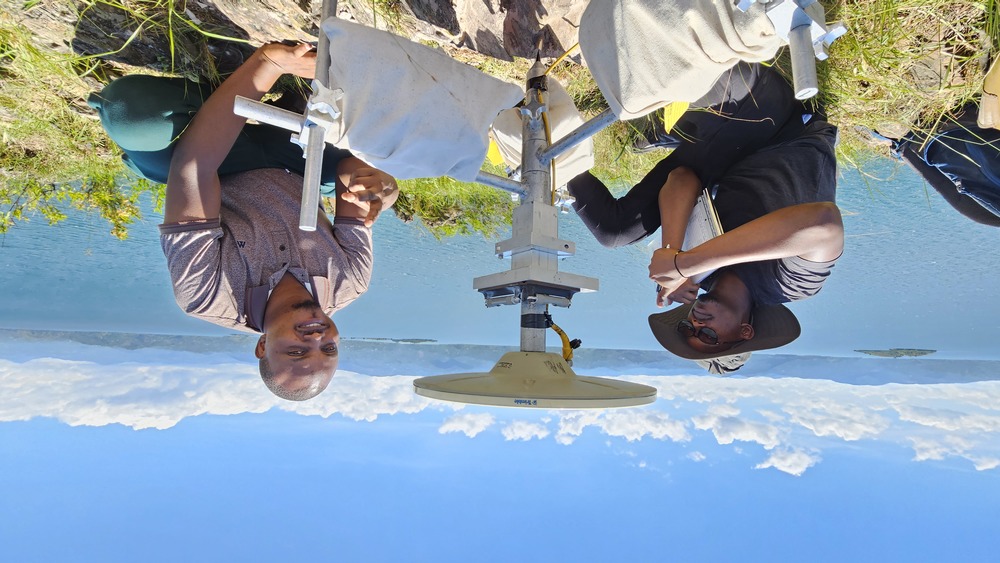
<img src="/assets/images/field/Rwanda/20230526_111536_sm.jpg" alt="Campaign GNSS Station NNPN" />
GT Grad Student Derrick Murekezi, and RMB Employee Gaspard Nywandi with campaign GNSS station NNPN.</p>]]></content><author><name>Andrew Newman</name><email>anewman_at_gatech_dot_edu</email></author><category term="Field" /><summary type="html"><![CDATA[We are just now wrapping up GPS/GNSS Field work and some training along the Kivu Rift in Rwanda.]]></summary></entry><entry><title type="html">Dr. Barama!!!</title><link href="https://avnewman.github.io/gradstudents/Introducing-Dr-Barama/" rel="alternate" type="text/html" title="Dr. Barama!!!" /><published>2022-11-19T10:21:22+00:00</published><updated>2022-11-19T10:21:22+00:00</updated><id>https://avnewman.github.io/gradstudents/Introducing-Dr-Barama</id><content type="html" xml:base="https://avnewman.github.io/gradstudents/Introducing-Dr-Barama/"><![CDATA[<p>Congratulations <a href="https://www.linkedin.com/in/louisa-barama/">Louisa Barama</a> for successfully defending your PhD Thesis yesterday afternoon on “Advanced Methods for Real-Time Identification and
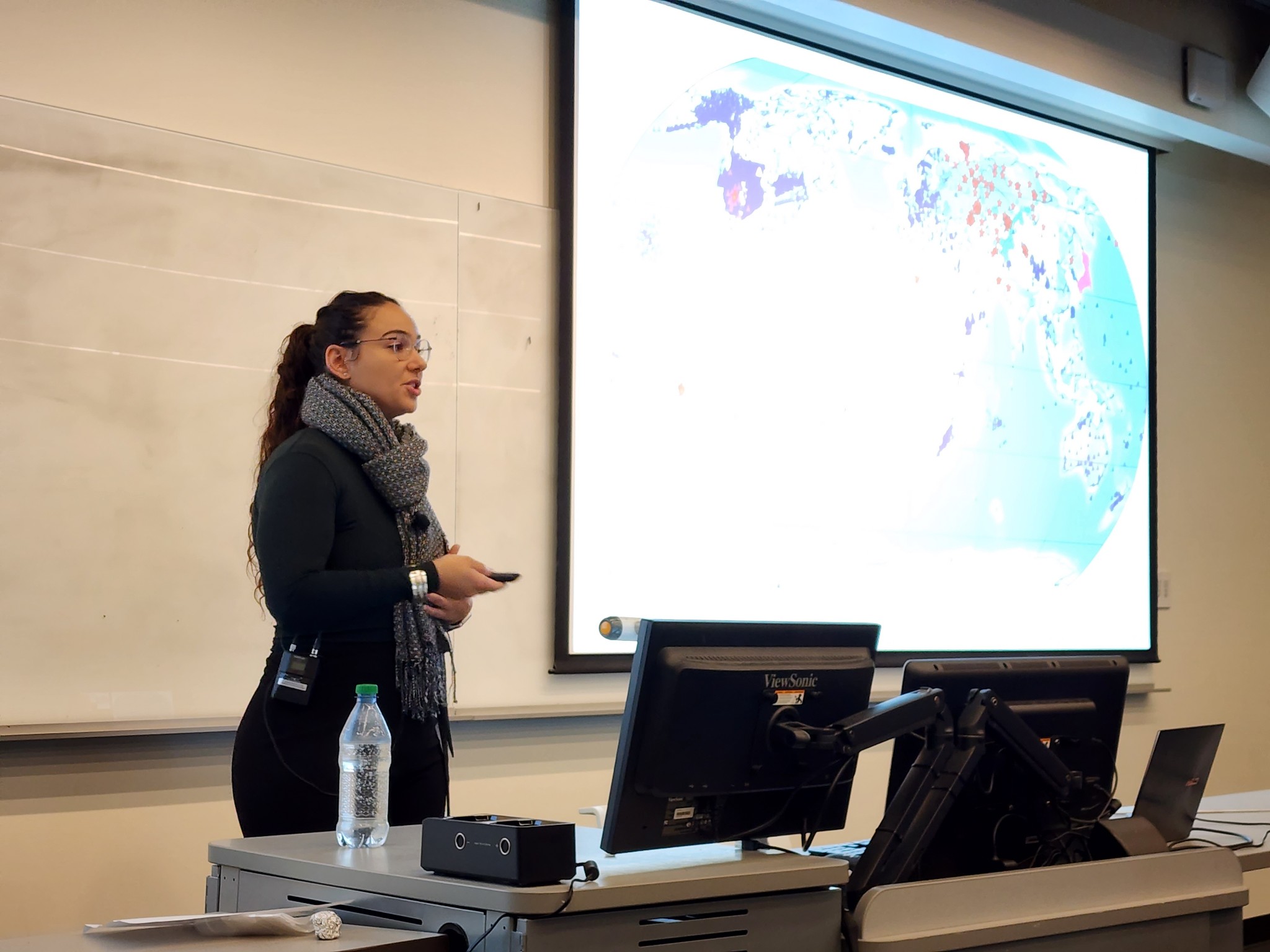
Determination of Seismic Events” Good luck with your fascinating new postdoc at Lawrence Livermore National Laboratory!</p>

<p><img src="/assets/images/student/LB_Defense1.jpg" alt="Louisa Defending" /></p>]]></content><author><name>Andrew Newman</name><email>anewman_at_gatech_dot_edu</email></author><category term="GradStudents" /><summary type="html"><![CDATA[Congratulations Louisa Barama for successfully defending your PhD Thesis yesterday afternoon on “Advanced Methods for Real-Time Identification and Determination of Seismic Events” Good luck with your fascinating new postdoc at Lawrence Livermore National Laboratory!]]></summary></entry></feed>